Wind turbines: sustainable energy for the Netherlands
Wind turbines convert wind energy into clean energy: the wind drives the rotor blades, and a generator converts the kinetic energy into electricity. Wind turbines are located both onshore and offshore and contribute to a clean energy supply: the production and construction of wind turbines and the use of wind energy result in much lower greenhouse gas emissions than fossil fuels. The Netherlands is investing in wind energy to achieve climate targets.
Wind turbines in brief
- Wind turbines use wind power to generate electricity.
- They are important for reducing CO₂ emissions in the Netherlands.
- Wind energy is a growing share of the Dutch energy demand.
- When developing wind farms, nature and local residents are taken into account as much as possible.
- Small wind turbines for home use are not yet cost-effective.
How wind turbines work
A wind turbine, also known as a wind turbine, consists of a tower with a rotor and blades (rotor blades) and a nacelle. It is designed to convert the kinetic energy of wind into usable electricity.How does a wind turbine work?
The wind sets the blades in motion, causing them to rotate. This movement drives a generator, which then produces electricity. The generated electricity is transported via cables to a transformer station or substation, where it is collected. From there, the electricity goes to the high-voltage grid, a network of power lines that transports electricity over long distances.
Modern wind turbines: smart technology
Modern wind turbines contain sensors and control systems that ensure the blades are always optimally positioned in the wind direction. This allows a wind turbine to capture the maximum amount of wind, making them an efficient and reliable source of sustainable energy.
Why are wind turbines necessary?
Wind turbines are essential for the Netherlands for several reasons.
- Wind turbines help the Netherlands achieve climate targets.
By generating electricity with wind instead of fossil fuels such as coal and gas, CO₂ and other harmful emissions are reduced. This is important to combat global warming. On average, using a wind turbine emits 8 to 34 grams of CO₂ equivalent per kWh of electricity. For a gas power plant, this is about 490 grams, and for a coal power plant, an average of 900 grams per kWh. That is a significant difference.
- Independent energy supply
Wind turbines also provide a more independent energy supply. The Netherlands is still dependent on energy from abroad, but with more wind turbines, the country can produce more energy itself. This is good for our independence and stability.
- Costs
Wind energy is, especially on a large scale, one of the cheapest ways to generate electricity. Onshore wind is about 67% cheaper than fossil energy, offshore wind is about 25% cheaper than fossil, according to a report by the International Renewable Energy Agency.

Why are offshore wind turbines needed?
Placing wind turbines at sea has several advantages over onshore wind turbines. Offshore, wind speeds are higher and more consistent, so the production per wind turbine is generally higher. There is also more space to place wind turbines, and they cause less nuisance. Offshore, there is also room for taller and more powerful wind turbines.Why are onshore wind turbines needed?
Nevertheless, onshore wind farms are also necessary. Their construction and maintenance are often less expensive than offshore wind farms, as they are more easily accessible. With onshore wind turbines, you can also generate energy locally and use it directly in the area. This reduces pressure on the national electricity grid, as the energy does not need to be transported over long distances.
How many wind turbines are there in the Netherlands?
At the end of 2023, the Netherlands had, according to CBS, more than 2,550 onshore wind turbines. Together, this is an installed capacity of about 6,800 megawatts (MW). Offshore, at the end of 2024, there were, according to the Netherlands Enterprise Agency, 670 wind turbines with a combined installed capacity of about 4,700 MW.Wind turbines: largest share of renewable energy in the Netherlands
In 2024, 54% of the electricity generated in the Netherlands came from renewable sources. Wind turbines (+14% growth) and solar panels (+15% growth) contributed most, thanks to the expansion of wind farms and the increase in solar panels on land. Wind turbines supplied 27.5% of the required electricity (onshore wind turbines 14.9%, offshore wind turbines 12.6%), solar panels 20.5%, and biomass 6.1% in 2024.
Eneco: around two million megawatt hours of wind energy per year
As of 31 October 2024, Eneco had 64 operational onshore wind farms with a total production capacity of 827 MW (Eneco’s share was 769 MW). Eneco expects to generate about 2,000 GWh annually. The actual annual production naturally depends on current weather conditions and the technical availability of the turbines.
How quickly does a wind turbine deliver climate benefits? Within a year
Wind turbines deliver rapid climate benefits. The energy required to build, install, maintain, and dismantle a wind turbine is quickly offset by the clean energy it produces.Onshore wind farms: ‘CO₂ payback period’ of 5.5 months
Research by Siemens shows that both onshore and offshore wind farms ‘pay back’ their CO₂ emissions in less than a year—compared to the CO₂ emissions they save with the sustainable energy they generate—while having a lifespan of 25 years. Onshore wind farms have the shortest ‘CO₂ payback period’ at a maximum of 5.5 months, followed by offshore wind farms at a maximum of 10.5 months.
How much renewable energy does a wind turbine generate?
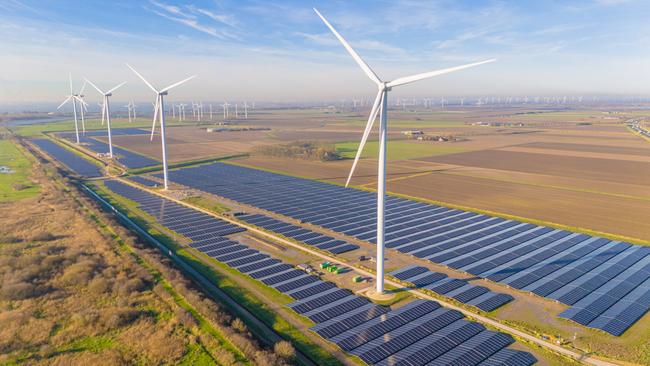
Wind energy produces relatively high energy per areaWind turbines and solar panels are both indispensable renewable energy sources for the future. To supply about 3,000 households with solar power, you need about 40,000 solar panels (about 32 football fields). To supply these households with wind energy, you only need one wind turbine.
The choice between wind or solar depends on the situation
Wind turbines therefore produce a lot of energy per area. But solar panels can be placed on the roofs of houses and buildings, so less ground space is needed. The choice between wind turbines or solar panels depends on the specific situation and the available space.
Both wind and solar energy are necessary
We need both wind and solar energy to make the Dutch energy supply more sustainable. These renewable energy sources complement each other well. When the sun shines, there is often less wind and vice versa. This ensures a stable energy supply.
How many households can one wind turbine supply with electricity?
An average household consumes about 2,500 kWh of energy per year. Onshore wind turbines produce 6 to 11 GWh per year (production varies by type and year). This means that one wind turbine can supply between 2,400 and 4,400 households with electricity annually.One offshore wind turbine can supply about 6,600 households with electricity
The average production of an offshore wind turbine is higher. Assuming an average production of 16.5 GWh per wind turbine per year, one offshore wind turbine can supply about 6,600 households with electricity for a year.
How many households can be supplied with electricity by wind energy?
According to the most recent figures from CBS (2023), onshore wind turbines in the Netherlands generated about 17.42 billion kilowatt hours (kWh) of electricity. Offshore wind turbines generated about 11.46 billion kWh. That is enough electricity for approximately 6.6 million and 4.3 million households, respectively.
How tall can wind turbines be in the Netherlands?
There are no standards for the height of wind turbines in the Netherlands. The tallest onshore wind turbines have a tip height (the highest point of a wind turbine) of 250 metres. Offshore, there is room for even taller wind turbines. Some sector players, such as the Dutch wind energy association NedZero, have proposed setting a maximum tip height of 305 metres for offshore wind turbines for a period of 10 years. This standard should increase predictability and stability in the sector. With a fixed maximum height, investments and planning can proceed more smoothly, enabling cost savings and a faster rollout of wind farms.
What is the effect of wind turbines on nature?
Wind turbines can have negative effects on animals. At every location, animal casualties can occur, but the number depends on the species present and their total numbers locally. At wind farms outside protected bird areas, most gull species already avoid the turbines at a greater distance, as shown by research by Waardenburg Ecology commissioned by Eneco. If gulls do enter the area where the blades move, they often still successfully avoid them.When planning a wind farm, research is first conducted into the impact on nature
The degree of disturbance depends on the location and the size of the projects. That is why thorough research is needed for every wind turbine initiative. This is examined in an Environmental Impact Assessment (EIA). An EIA is a report that helps to provide insight into the effects of the project on, among other things, water, soil, air, waste, nature, health, and archaeological heritage. Alternatives are also examined in an EIA, so that a good choice can be made that causes as little harm to the environment as possible.
Eneco wants to make a positive contribution to nature
Eneco also wants to make a positive contribution to nature around wind farms. An example is the breeding island near the Pier of Otterdum in Groningen. This is a breeding island created near a wind farm. This island is now a breeding ground for birds.
Ecowende: example of an ecological offshore wind farm
Another example of attention to biodiversity is the Ecowende project. Its construction is guided by ecology and the restoration of biodiversity. Eneco also works with scientists to further investigate and reduce the effects of wind turbines at sea.
What can be the impact of wind turbines on people?
Wind turbines can have an impact on people. This can include noise, shadow flicker, or visual intrusion. There are legal regulations to limit the amount of noise and shadow flicker.Environmental standards for wind turbines
There are legal agreements about how much noise and shadow flicker a wind turbine may produce. Wind farm owners must comply with these standards. When deciding whether to install wind turbines, the amount of noise and shadow flicker that a wind turbine adds to the environment is one of the factors considered. At present, there is no political agreement on the new standards.
Noise standards
A wind turbine may not produce too much noise. An individual wind turbine may not produce more than 47 decibels of noise on average during the day over a year. At night, this may not exceed an average of 41 decibels per year.
Shadow flicker
Sometimes the blades of a wind turbine can cause a moving shadow that falls on the windows of houses. By law, this may not last longer than 20 minutes per day and not more than 17 days per year. These rules protect people living near a wind farm. We understand that shadow flicker can be experienced as a nuisance. That is why we choose to be stricter than the legal standard. Our aim is to minimise shadow flicker as much as possible.
Involving the community in projects
Eneco believes it is important to involve everyone who lives, works, or spends leisure time in the vicinity of our plans in the arrival of wind turbines. That is why discussions are held about the plans and people can contribute ideas about the project. The aim is to find solutions together that work as well as possible for everyone.
The Climate Agreement provides for participation arrangements
The Climate Agreement also includes agreements on the participation of the local community in wind turbine projects. This can include financial participation, allowing the local community to benefit from the proceeds of the wind farm.
Different forms of financial participation
There are various forms of financial participation, such as co-ownership, community funds, and bonds. Direct neighbours can also receive compensation.
Small wind turbines for private individuals are still not sufficiently profitable
There are small wind turbines suitable for private individuals to generate energy at home. Eneco does not yet sell these products, as they have several disadvantages: they generate little energy, are expensive to purchase, and are not yet profitable.Payback period for small wind turbines often long and uncertain
The payback period for small wind turbines is often long and uncertain. There are also costs for permits, installation, and connection. For large-scale energy generation, large wind turbines are much more efficient.